Showing posts with label 1860. Show all posts

Friday, January 6, 2012

Historical Medicine: Ann Shorey

I'm pleased to have Ann Shorey back with us today as she discusses some uniquie aspects of 19th century medicine with a fun quiz. Do you know the answers? Don't fear, they're posted.

Welcome back, Ann!

As people of the 21st Century, we’re accustomed to hearing about advanced medical tests, such as an MRI or a CAT scan, even though we may hope we never need the technology. We think of blood tests, urine samples, even DNA testing, as the norm.
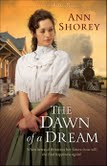
But if we lived in the same time and place as the characters in my At Home in Beldon Grove series, none of those advances would be available. The series begins in 1838 with The Edge of Light and concludes in 1857 with The Dawn of a Dream. The “middle child” in the series, The Promise of Morning, is set in 1846.

Here are a few medical questions that arise in the series. The answers appear at the end of the post.

1.      Dr. Karl Spengler is a continuing character throughout the Beldon Grove series. Try to put yourself in his place when faced with a diagnosis of cholera. What was a popular treatment of the day?

2.      What was common therapy for a croupy baby?

3.      How would a doctor have cared for a serious injury to an eye?

4.      When faced with a listless infant who wouldn’t eat and whose limbs lacked any strength, what would the doctor’s diagnosis have been? And if he’d known what was wrong, would he have recognized the cause?

5.      What were the signs of acute heart failure, and with what medication would the patient have been treated? For that matter, what did the medical community call heart failure?

Here are the answers. Some were gleaned from family accounts written at the time, others from research.

1.      Cholera was commonly treated with heavy doses of calomel (mercurous chloride), which we know now is poisonous, and bloodletting via leeches or cutting. Your chances of survival were better without the treatment.

2.       A croupy baby would have had to endure a piece of flannel saturated with turpentine wrapped around its throat.

3.      For an injury to an eye, a poultice of slippery elm bark was placed on the wound. Then the head was wrapped in a bandage and the patient was made to lie flat until healing took place.

4.      The doctor would have had no idea what was wrong with the infant. Only until many years later would it be known as infant botulism, one cause being feeding honey to babies under one year of age.

5.      The signs of acute heart failure haven’t changed (shortness of breath, fluid retention), although diagnosis and treatment are much more sophisticated today. In the mid-1800’s,  the condition may have been treated with a carefully monitored digitalis decoction. In that sense, the medication was the same, although today’s compounds are far safer.
At that time the condition would possibly have been called edema of the lungs, or dropsy. The term “heart failure” wasn’t commonly used until 1895, and “heart attack” came into our vocabulary in the 1930’s.

Makes be glad to be living now. The good old days weren’t all that good, at least not if you or someone you loved was sick!

******************************************************************************

ANN SHOREY has been a full-time writer for over twenty years. Her writing has appeared in Chicken Soup for the Grandma’s Soul, and in the Adams Media Cup of Comfort series. She made her fiction debut with The Edge of Light, Book One in the At Home in Beldon Grove series. She’s tempted to thank Peet’s coffee and Dove chocolates when she writes the acknowledgments for her books.

 She may be contacted through her website, www.annshorey.com, which also contains her blog, http://annshorey.blogspot.com/ or find her on Facebook at http://www.facebook.com/AnnShorey.

Wednesday, January 4, 2012

Historical Medical Question: Laudanum Dosing

I have the great pleasure of hosting Ann Shorey today and Friday. First, I'd like to give her my warmest congratulations on the release of her novel Where Wildflowers Bloom that released Jan 1, 2012. What a great New Year's Day gift. I hope you'll check it out.

Ann Asks:

My wip is set in 1867. One of my characters is a doctor. Here are a couple of questions:

How much laudanum would be needed to give pain control to a four-year-old? How much for an adult male? How would it be administered--diluted in water, or swallowed straight?

Jordyn Says:

First thing to understand about laudanum is that it is an opiate based pain killer. Its contemporary counterparts would be drugs like Fentanyl and Morphine. Therefore, it could have the same type of adverse reactions that these drugs have. If a patient were to receive too much, their respiratory drive could slow down and/or stop. Also, these are not uncommon drugs to have an allergic reaction to.

I found a great resource for Ann. It's an old medical text written by Dr. Chase, a physician during this time period. I was able to link to the exact information she needed. You can view it here:
http://www.archive.org/stream/drchasesrecipes01chas#page/132/mode/2up. The text gives a recipe on how to mix the drug and states: "From 10-30 drops for an adult, according to the strength of the patient or the severity of the pain." So for children, I would imagine you would start with single drops.

I also wanted to point to this post written by historical author Ann Love (who I think has the best historical author name ever!) over at Anne's Love Notes. She writes a more in-depth piece concerning Dr. Chase that will be of interest for historical authors. You can find it here: http://anneslovenotes.blogspot.com/2011/11/researching-19th-century-primary-source.html.

Any other thoughts for Ann?

********************************************************************************

ANN SHOREY has been a full-time writer for over twenty years. Her writing has appeared in Chicken Soup for the Grandma’s Soul, and in the Adams Media Cup of Comfort series. She made her fiction debut with The Edge of Light, Book One in the At Home in Beldon Grove series. She’s tempted to thank Peet’s coffee and Dove chocolates when she writes the acknowledgments for her books.

 She may be contacted through her website, www.annshorey.com, which also contains her blog, http://annshorey.blogspot.com/ or find her on Facebook at http://www.facebook.com/AnnShorey.


Friday, April 22, 2011

1860's Medicine: Laurie Kingery (Part 3/3)

It's been my pleasure to host Laurie this week. In her final post she gives a brief overview of medicine during the 1860's. This is great information for any historical writer. Thanks Laurie for all of your hard work!

THE STATE OF MEDICINE IN THE 1860'S

A writer always wants to make her hero an admirable person, perhaps even exceptional for his time, but still realistic. Nowhere is this more of a challenge, I believe, than when one's hero is a doctor in the past.

Medical colleges were in their infancy, and though my hero attended one, most doctors were still trained by apprenticing themselves to doctors already in practice, and reading what textbooks were available. There was no national requirement that doctors attend a recognized medical school. Doctors saw patients in their office, but more patient visits took place when the doctor arrived in his black buggy.

When the story begins, Dr. Walker had just come out of the Civil War, in which he had been a doctor with the Union Army. In that war, as in many others, as many soldiers died of unsanitary conditions and contaminated food as died on the battlefield. Medical tents and buildings used for medical treatment were overcrowded and doctors worked around the clock, hampered by lack of supplies and knowledge. The most common treatment for wounds was amputation; the most common non-traumatic death was caused by dysentery.

Making Dr. Nolan Walker exceptional in his medical practice was more about what he didn't use in the way of medical treatment than what he did. Many doctors of the time still used blood-letting as a treatment. One of the most popular medicines used was calomel, a compound whose main ingredient was mercury, which we know today to be a toxic substance. But back then it was used for almost every ailment, and was believed to be a stimulant, a cathartic (meaning it induced bowel movements) and an antimicrobial (though before bacteria were fully understood). Most often used for syphilis and given orally, it gave the patient foul breath, excessive salivation, and muscle trembling. It produced brain damage, and Dr. Walker was too smart to use it.


AbSinthe_laudanum/PhotoBucket
Another very common medicine was laudanum, and it was readily available over-the-counter. Its chief ingredients were opium and alcohol. Though useful as a sedative when that was truly needed, it was addictive and often abused. Even when used judiciously, it could produce nightmares in the patient.

The use of carbolic acid, discovered by Lister in Europe, as a disinfectant before and during surgery had just begun, but was not generally accepted. Many doctors still operated in street clothes and didn't wash their hands between patients. Indeed, my doctor Walker was scorned as "fussy" by his fellow Army doctors for using it, but his amputation patients died much less often that those of his scorners. Dr. Walker uses it when Sarah Matthews falls and cuts her arm.

The wise doctors of the time, such as my hero, used remedies such as willowbark tea to reduce fever, and scorned the patent medicines sold over-the-counter and by medicine-show quacks. The key to treatment, in their view, was supportive therapy—any treatment which strengthened the body's ability to heal itself. He believed in the tenet of the Hippocratic Oath which says "First, do no harm."

It's impossible to give a thorough summary of the state of medicine in the mid-1800's in a blog. Indeed, it's the subject of many fascinating and lengthy books. My object in this blog entry was to give you a quick glimpse of medicine as practiced by Dr. Nolan Walker in the town of Simpson Creek, Texas. (He appears in all my "Brides of Simpson Creek" books, including the one I'm writing now, when one of the main secondary characters suffers an apoplexy, or stroke.)

There were several books I used in writing THE DOCTOR TAKES A WIFE. Below is a list the ones I used most:

A Textbook of the Theory and Practice of Medicine, edited by Wm. Pepper, MD, W.B.
            Saunders, 1893 (which I found in an antique store!)

A History of Medicine, Dr. Jenny Sutcliffe and Nancy Duin, Barnes and Noble Books,
            1992.

Lotions, Potions and Deadly Elixirs: Frontier Medicine in America, Wayne Bethard,
            Taylor Trade Publishing, 2004

Bleed, Blister and Purge: A History of Medicine on the American Frontier, Volney
            Steele, MD, Mountain Press Publishing Company, 2005

Civil War Medicine, Robert Denney, Sterling Publishing Co., 1994

My website and blog are located at: http://www.lauriekingery.com . I answer all mail.
Thanks, Jordyn, for giving me this opportunity to talk about mid-1800's doctoring and promote The Doctor Takes a Wife and my other "Brides of Simpson Creek" books published by Love Inspired Historicals.

********************************************************************************


You can find out more about Laurie at her website: http://www.lauriekingery.com/index.html

Wednesday, April 20, 2011

1860's Medicine: Laurie Kingery (Part 2/3)

Laurie continues her three part series today with an excerpt from her novel, The Doctor Takes a Wife. This scene makes me thankful I'm a nurse now and not in the 1860's.

An Excerpt from The Doctor Takes a Wife, by Laurie Kingery
(Love Inspired Historicals, January 2011)

This excerpt illustrates just how limited the physicians of the nineteenth century were—no I.V's, no aspirin, no antibiotics or anticonvulsant medications…

Just then, a harsh, guttural cry erupted from the woman on the bed. Her spine arched like a tightly-drawn bow.

"She's having a seizure!"

Sarah's slender frame threw itself into a racking series of alternating contractions and relaxations. The bed frame thudded in a horrible rhythm against the wall with the force of the convulsion.

Nolan's hand dived to her forehead, and flinched as he felt the heat there. She was as hot as if the very sun had taken up residence within her.

"Dear God!" Chadwick cried.

"Help me turn her on her side, Reverend!" he said, fearful that Sarah would choke.

Prissy ran into the room, perhaps drawn by the noise of the bed shaking, and screamed when she saw Sarah convulsing.

"Prissy! Go out and see if there's ice in the rain barrel—or in a water trough in the stable. I need it to get her fever down!" Nolan wasn't even sure if she could get it in time to help her friend, but he sure couldn't think with Prissy's shrieking reverberating in his ears.

He was dimly aware of the preacher trembling and sinking to his knees on the other side of the bed, his hands clasped, his head bent.

The seizure went on for an eternity, though in actuality it probably only lasted thee minutes. Then her body sagged in limp exhaustion and a faint pink crept back into Sarah's chalky, blue-white lips. Nolan felt engulfed by hopeless despair flooding through him. It was never good when a fever soared so high the patient convulsed. He was going to lose her. Perhaps he should have let Prissy cut her hair…

"Reverend, please, pray harder!" he whispered desperately.

What medical treatments fascinate you from this time period?

***********************************************************************

You can find out more about Laurie at her website: http://www.lauriekingery.com/index.html

Monday, April 18, 2011

1860's Medicine: Laurie Kingery (Part 1/3)

I'm pleased to host guest blogger and fellow ER nurse, Laurie Kingery. Laurie works combined ED (both adult and pediatrics) at a Level I trauma center. She will be posting this week about her research into medicine during the 1860's and her novel The Doctor Takes a Wife. Welcome, Laurie!

Researching THE DOCTOR TAKES A WIFE


In 2009, when I was in the planning stage for my book, The Doctor Takes a Wife, the second book in the "Brides of Simpson Creek" series for Love Inspired Historicals, I wanted to give my hero, Dr. Nolan Walker, late of the 20th Maine regiment in the Civil War, a major crisis to surmount. It was all very well to depict a doctor in a small Texas hill country town delivering babies, setting broken bones, and riding to outlying ranches in his black doctor's buggy, but I wanted to give him a dramatic role that twenty-first century readers could relate to. First I thought of a cholera epidemic—there were certainly plenty of those back in the days of unchlorinated drinking water and easily contaminated food, and I could remember hearing about cholera epidemics portrayed on the old TV westerns such as Rawhide and Wagon Train.

But very frankly, cholera is a disease of profuse vomiting and diarrhea. As a veteran emergency room nurse I am certainly used to dealing with those symptoms (though not due to cholera, thankfully) and I was pretty sure readers didn't want to read about that in a romance any more than I wanted to write about it.

But this was the time when we were all bracing for the worldwide pandemic of H1N1 influenza. The first few fatal cases had been diagnosed in Mexico and Texas, and experts were predicting the possibility of deaths on a scale not seen since the influenza epidemic of 1918. Vaccine producers were gearing up to produce immunizations. At work we were told the staff would get vaccinated, "or else." Hysteria was definitely in the air.

So the subject of influenza was definitely a timely topic, but influenza epidemics also occurred in the 1800's, though not on the scale of the "Spanish flu" in 1918. Bingo—my fictional community would endure an influenza epidemic, and my hero Dr. Walker could indeed do heroic things. Then came the question of how to research the topic.


During this time I heard an interview of John Barry, the writer of The Great Influenza, a book about the 1918 influenza epidemic. Due to the threat of an H1N1 epidemic, the book was receiving renewed attention. Thankfully, the library carried the book on CD, so as I drove to work I could listen and research my book.

The story of the 1918 influenza epidemic was both fascinating and frightening. At the height of World War I, the epidemic began mildly enough in an army camp in Kansas. When the troops moved east, it appeared to die down for awhile, and then erupted worldwide. By the time it faded away, it had killed an estimated 100 MILLION people, "more than the Black Death killed in 24 years, more than AIDS killed in 24 years," to quote one review. At one point, cities were running out of coffins for the corpses. It could kill at astonishing speed. The book cited an incident of a healthy person boarding an omnibus for a trip across town being felled by the virus and dying before he reached his destination. A scary fact was that the younger "healthy" adults, such as soldiers, seemed the most likely to die. I heartily recommend the book, though it is long, goes into a lot of pathophysiology, and goes way back into history to give background on the state of medicine at that time. But the author takes care to make it interesting and understandable.

Although several individuals lost their lives during my fictional epidemic in THE DOCTOR TAKES A WIFE, it didn't compare to the 1918 epidemic, of course. But it provided great scope, I think, to show what limited resources the physicians of that time had to combat such illnesses and their complications—mainly willowbark tea to treat fever (a source of acetyl salicylic acid, from which modern aspirin is made), sponge baths to lower fever, fluids, laudanum and prayer. Next I'll post an excerpt from the story showing a crisis point in the book, when Nolan Walker is afraid he will lose the woman he loves, Sarah Matthews.

****************************************************************************


You can find out more about Laurie at her website: http://www.lauriekingery.com/index.html