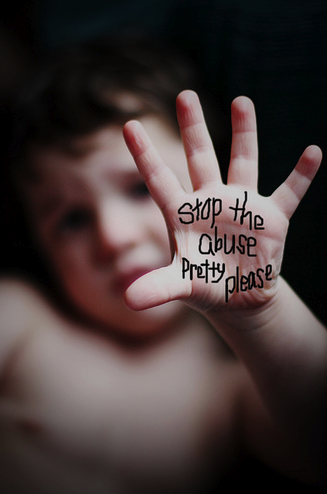
In The Name of God delves into the ramifications of religious shield laws which (thank heavens this is changing) grant protection under the law if a child dies of a treatable medical illness and due to the parent's religious beliefs-- they refused medical care.
This touches close to me as a pediatric ER nurse seeing parents refuse some aspects of medical care-- immunizations would be the largest. As a parent, I believe in my right to make decisions for my children, but as a pediatric nurse, I also believe that children deserve a certain level of medical care to grow up strong and healthy. The line between these two are not always clear.
Refusing immunizations pales in comparison to what these religious groups do-- who believe that God is the ultimate healer and that if God decides-- their child will be healed from illness. Sadly, these kids die from highly treatable conditions like pneumonia, cysts, prematurity, diabetes, and urinary obstructions. The strange thing is, The Followers don't seem to have trouble going to the dentist or eye doctor.
The book alternates perspective between the legal side (those trying to change these laws) and inside views of The Followers as a religious group.
The book is interesting but really needed to be pared down. I don't need to read a play by play of a child's vomiting and throwing up each meal over two days to get the point that they couldn't hold anything down. Also, I don't think it's necessary to give gory details about a pediatric autopsy-- using words like, "This doctor was going to eviscerate . . . " I think it's disrespectful of a pediatric victim to do that. The intimate look into The Followers, in my opinion, became overindulgent and tedious to read.
That being said, I do think this is an important, challenging book and in this era of religious extremes, I think those of us that have faith need to speak out against the extremes of our faith and I applaud this book for doing so in a balanced way.
Showing posts with label Child Abuse. Show all posts
Tuesday, January 20, 2015
Thursday, October 16, 2014
Parents Behaving Badly: The Case of Justin Ross Harris
As a pediatric nurse, I've been intrigued by the case of Justin Ross Harris, who is accused of killing his son by leaving him in a hot car.
This is one of those things, personally, that I do kind of scratch my head at. I know people get stressed. I could even understand leaving a child behind for a few moments before your rationale brain kicked in and said, "Hey, the baby's in the car."
I mean, we treat phones so much better.
He has pled innocent but this CNN HLN article brings up some interesting points that came from his hearing that I thought I would highlight here. These come directly from their piece.
1. It was a normal morning. Meaning, he was the one who usually took his kid to school. It wan't unusual for them to stop at Chik-fil-A for breakfast. When you do things repeatedly, there's less room for error.
2. It's a short distance from Chik-fil-A to his daycare. Like one minute. So, in one minute, he loaded his son up in the car but then forgot he was there.
3. You could see the child from the rear view mirror. This is a pretty interesting point. Evidently, Harris backed into his parking spot. He doesn't have a rear view camera so would have had to look in his mirror. When they placed a mannequin of similar size in that seat it was visible in the mirror.
4. Bizarre behavior. Witnesses felt like he was "working" at being emotional.
5. Strange statements. One alleged statement: "I dreaded how he would look."
6. Additional Injuries. Abrasions to the back of the head.
7. Sexting. Harris was sexting six different women as his son died including sending explicit photos.
8. Life Insurance. The child had two life insurance policies on their son and might have been in financial trouble from credit card use.
9. Internet Activity. Disturbing internet searches for videos with people dying, how to be child-free, how to survive prison and the age of consent for Georgia.
10. Harris is deaf in his right ear. This is used by the defense to perhaps explain that he didn't hear his son in the car.
Whatever happens in this case, one good thing that might come from these deaths is the invention from one teen, designed to alert parents if they do accidentally leave their child in the car.
What do you think from what you've hear of the Harris case? Do you think he committed murder?
Labels:
Child Abuse,
Child Left In Hot Car,
homicide,
Hot Car Deaths,
Murder
Thursday, May 1, 2014
Mothers Behaving Badly: 2/2
April was Child Abuse Prevention month. Obviously, this holds a place close to my heart as I deal with victims of abuse with needless
frequency. Needless because these injuries are 100% preventable.
I'm continuing my series on infanticide cases of note that have happened recently. You can read my last post here on the Megan Huntsman case.
![]() |
| Image Link |
This
story from People magazine caught my eye because the prosecution
involved in this woman's case alleges she breastfed her baby to death.
In
short, during the infant's first month of life, it only gained four
ounces. Average weight gain is 0.5-1 oz per day for around 15oz on the
lighter side.
Then: At 6 weeks old, she died,
and an autopsy found enough morphine in her brain, liver and blood to
kill an adult. With no puncture marks or other trauma, Alexis –
authorities concluded – could only have gotten the drug through
breast-feeding.
Question #1:
Does morphine pass through breast milk? Yes, it does. The concerning
issue for me is that one of the major side effects of opiate ingestion
is bodily systemic depression. Everything slows down. The patient gets sleepy and
their HR, respiratory rate and heart rate can be lower. You need a
somewhat awake infant to feed. Seemingly, it is alleged the baby became
toxic through breast milk ingestion only because of the lack of trauma.
However, I think it should be considered that she also could have
directly given the baby medicine.
Question #2:
Is the sole source of breast milk enough to cause this level of
poisoning? I do have
issue with this statement. I think it should be considered
that she also could have directly given the baby morphine. It turns out the baby's mother, Stephanie
Greene, is a nurse. She would have the know how to directly give the
baby morphine and I wonder if this was considered during her trial.
Evidently, her nursing "skills" were brought up during the trial in the
fact that she doctor shopped for all her scripts. I think this is common
among drug users and I don't think her nursing knowledge was
particularly helpful in this area-- but it could have been with the
administration of the drug to her baby.
More
attention should be paid to this, especially considering her attorney
states there's never been a US death associated with breast feeding and
morphine. To me, this makes direct administration more plausible and
sadly, it would not be that difficult to do.
She has been sentenced to 20 years in prison.
In light of April being Child Abuse Prevention month-- please remember you might be the only one to save a child's life. Report suspicion of child abuse.
Labels:
Child Abuse,
Homicide,
Infanticide,
Stephanie Greene
Tuesday, April 29, 2014
Mothers Behaving Badly: 1/2
I would be remiss as a pediatric ER RN to not mention that April is Child Abuse Prevention month. Every April comes around and I think I shouldn't talk about child abuse this year. Haven't we overcome this as a society? I delayed it most of the month until we had a significant child abuse case come in to our emergency department.
It appears we still need to talk about it. People are still injuring and killing their children.
I thought I would discuss two interesting cases of recent note.
One is the case of Utah woman Megan Huntsman. I know-- ironic last name, isn't it?
Ms. Huntsman is accused of murdering six of seven infants and then disposing of them in her garage in cardboard boxes. Authorities think one of the babies was stillborn. They were discovered by her ex-husband as he was cleaning out the home in order to move in. Authorities think this happened over a 10 year period from 1996-2006. What's interesting is that Megan evidently hid her pregnancies from everyone. Neighbors noticed that her weight would vacillate between wearing baggy clothes and tight clothes. They never imagined she was hiding pregnancies. DNA testing is pending to ensure these are her children.
What's curious is that she had a daughter born during this time frame that was allowed to live. What was the choice behind allowing this child to grow-up?
Huntsman evidently has told police that she is responsible for their deaths either by strangulation or suffocation. What she doesn't say is why.
What's frustrating from a medical/human perspective is that Utah has a Safe Haven law which allows a person to drop off newborn infants without fear of prosecution if the infant is unharmed.
I'm guessing-- but I think this likely would have been a short car ride down the street.
You can read more about Megan Huntman's case here and here.
It appears we still need to talk about it. People are still injuring and killing their children.
I thought I would discuss two interesting cases of recent note.
One is the case of Utah woman Megan Huntsman. I know-- ironic last name, isn't it?
Ms. Huntsman is accused of murdering six of seven infants and then disposing of them in her garage in cardboard boxes. Authorities think one of the babies was stillborn. They were discovered by her ex-husband as he was cleaning out the home in order to move in. Authorities think this happened over a 10 year period from 1996-2006. What's interesting is that Megan evidently hid her pregnancies from everyone. Neighbors noticed that her weight would vacillate between wearing baggy clothes and tight clothes. They never imagined she was hiding pregnancies. DNA testing is pending to ensure these are her children.
What's curious is that she had a daughter born during this time frame that was allowed to live. What was the choice behind allowing this child to grow-up?
Huntsman evidently has told police that she is responsible for their deaths either by strangulation or suffocation. What she doesn't say is why.
What's frustrating from a medical/human perspective is that Utah has a Safe Haven law which allows a person to drop off newborn infants without fear of prosecution if the infant is unharmed.
I'm guessing-- but I think this likely would have been a short car ride down the street.
You can read more about Megan Huntman's case here and here.
Labels:
Child Abuse,
homicide,
infanticide,
Megan Huntsman,
Utah
Tuesday, February 4, 2014
Book Review of The Psychology of Dexter: Part 1/3
Frequent followers of this blog know I'm a fan of the television show Dexter-- not necessarily for its medical accuracy but for its amazing plot and character development. Honestly, I wish I would have been the author to create a series about a vigilante serial murderer working for the police department.
Sheer genius. You can read some of my medical analysis of Dexter here and here.
So, of course, I was intrigued when I found the non-fiction book The Psychology of Dexter that includes a collection of essays on various topics analyzing the show from different mental aspects and, over the next few posts, I'm going to highlight some interesting tidbits I learned along the way.
The first essay I found interesting was titled Rethinking Dexter by Lisa Firestone, PhD. What follows are quotes from the actual book or are very close paraphrases. This particular essay dealt with childhood PTSD and whether or not early treatment of psychopathic children could reduce their violent nature in the future.
1. "Research shows that a child's cruelty toward animals almost always arises out of an abusive family environment. Humane education that focuses on developing empathy toward animals generalizes to empathy for human beings. The National District Attorney Association suggests that targeted therapy at this could save future lives."
2. "Research suggests that psychopaths almost always are treatable if they receive intensive therapy for a proper duration of time." which throws out the theory that there is not hope for these types of people.
3. "Studies have shown that almost 100% of children who witness parental homicide develop PTSD because of the severity of the traumatic event. Eighty percent of children that have been imprisoned, rendered immobile in some way (buried alive, tied up, or tortured) will develop PTSD as well."
4. "Childhood trauma has an impact on actual brain development. It can cause serious structural abnormalities in the frontal lobe, known as 'the seat of emotion.' Brain researchers have found that these abnormalities often result in deep-seated personality deficits such as an inability to be empathetic."
4. "When childhood events are traumatic enough to cause PTSD, children dissociate from themselves as the helpless victim and identify instead with the aggressor. They identify with the very person who is hurting them, who they see as strong and not vulnerable to the type of pain they are experiencing. This is the only survival strategy available to the child."
5. "An additional common symptom of early childhood PTSD is post-traumatic play, in which children repeat themes or aspects of the trauma they experienced. This does not relieve anxiety."
Are you surprised by any of this information as it relates to childhood PTSD?
Labels:
Child Abuse,
Childhood Trauma,
Dexter,
PTSD,
The Psychology of Dexter
Thursday, November 28, 2013
Medical Critique Hostages: One Episode to be Thankful For
Okay, I admit it. I've been beating up on the CBS drama Hostages. So-- since it is Thanksgiving and we're to be thankful I'm going to give a shout out to Hostages for one accurate story line.
Then it will be back to a hard medical critique as there is MUCH to discuss in some of the most recent episodes.
In one of the minor plots, the teen daughter is, of course, pregnant. Her father takes her to an OB/GYN to check the status of the pregnancy and stays in the waiting room.
Accurate portrayal #1: Teens presenting for care related to reproductive issues or sexually transmitted diseases are treated as adults in the sense that they don't have to have a parent present to consent for treatment and should be seen privately by the physician.
During the exam, the physician asks her what all the bruising is about. And, the teen girl does have a suspicious bruising pattern.
Accurate portrayal #2: Suspicious bruising patterns are those that:
1. Can't be explained by the history given (I fell down the stairs.)
2. Are located over non-bony prominences. This teen presented with bruising to her upper arm (from being grabbed) and to her back (from cutting out a tracking device.)
3. Are numerous and extensive.
The doctor becomes suspicious and notifies social services.
Accurate portrayal #3: A physician is a mandated reporter under most state statutes to report a suspicion of abuse. They don't have to know beyond a shadow of a doubt that something is happening but if, in good faith, they are concerned by what they see then a report is necessary.
In a few days the teen is approached at school by a county social worker for questioning.This occurs in episode seven.
Accurate portrayal #4: There would definitely be an evaluation of the teen in private-- away from the parents. The social worker also interviewed the brother, who also had a black eye. Alone. In psychiatric situations involving teens the family is generally interviewed together and at some point-- each member is interviewed alone to get what's really going on.
So on this Thanksgiving Day-- thank you Hostages for accurately portraying management of a family when there is concern for abuse.
Now everyone-- have a safe and great holiday. I'll be working the ER and I don't want to see you ;)!!
Labels:
Child Abuse,
Hostages,
Mandatory Reporting,
Social Services,
Social Work
Thursday, October 10, 2013
Plausible Deniability: Child Abuse
Unfortunately, as a pediatric ER nurse, it is part of my job
to deal with abhorrent parts of family life. The parts that the average citizen
doesn't think about on a daily basis. Maybe even they deny what is in front of
their very eyes.
What I know to be true is that children are abused. Their
most likely abusers are those closest to them. Mothers. Fathers. Boyfriends.
Caregivers. It is not the stranger on the street that comes in, shakes your
infant, and then disappears into the night.
When I began working in the pediatric ICU (PICU) what
surprised me most was not that children were abused but that the general public
didn't believe it and it was very hard to get people convicted on child abuse
charges for just that reason. It wasn't that there wasn't sufficient evidence . . .
it was that the jury simply couldn't believe that a mother, any mother, would
willfully press her child's hand to an iron and hold it there.
Surely, that was accidental.
Maybe you have suspicion that a child you know is possibly
being abused but you're afraid to take that step of contacting someone in a
position to help. You may say to yourself-- I don't really know what the signs
of child abuse are-- and I don't want to put anyone through needless
accusation.
So, what are some of the classic signs of child abuse? I'll
list some here. Remember, one of these symptoms in isolation doesn't always indicate abuse
(thought it also may) but the more items on this list that you see-- the more
likely is the possibility the child may be being injured. I'm going to focus on
physical abuse.
1. Bruises over non-bony prominences. Common childhood
bruising occurs to the knees, shins, elbows, and forehead. These tend to be the
areas that children fall onto. Bruising to the buttocks, abdomen, back would be
areas that are not bony prominences. Now, one bruise to the buttocks may not be
indicative but multiple bruises to the buttocks-- particularly in a diapered
child-- is concerning.
2. The bruise has a shape/pattern to it. Think about all the
bruises you've seen on a child. They are typically round, irregularly shaped--
and over a bony prominence. Bruises with a pattern are often inflicted. It takes
force to imprint the pattern onto the skin. Think of a bullet. There is much
more damage inflicted on a person if I fire it from a gun versus if I just
hold it between my fingers and tap you with it.
3. The history does not match the injury. Think about what a
child should be able to do normally. Say you have a neighbor with a
two-week-old baby who always is bruised up. She says the baby just keeps
rolling off the couch. One, a child of that age cannot do that developmentally.
This should be red flag #1. Also, any bruising to the face, head, and neck of a
child who is not yet pulling up to stand is concerning because-- how are they
hurting themselves if they aren't falling down?
So, take some of these things into consideration when you
are concerned about a child who may be being abused. Most of all, if you're gut
is telling you something is wrong-- listen to it. You may be the only adult who
will stand up for that victim and actually save a life.
Friday, April 12, 2013
Child Abuse Injuries: Shaken Baby Syndrome 3/3
April is Child Abuse Prevention month and as a
pediatric ER nurse, I thought I’d spend some time talking about the most
devastating child abuse injury, in my opinion, and that is Shaken Baby Syndrome
or SBS.
In Part I and Part II I talked about the brain
injuries associated with SBS: Diffuse Axonal Injury and Subdural Hematomas.
Now—we’ll discuss another classic injury associated with
this abusive injury—retinal hemorrhages.
Just what is this bird? Anyone know? Well, it is a
woodpecker. Now you may be wondering exactly what do woodpeckers have to do
with shaken baby injuries.
Interestingly, Alex Levin, an ophthalmologist from
Canada, wondered why woodpeckers did not suffer retinal hemorrhages when they
were pounding their beaks against trees. After all, the whiplash type movement
is similar to the injury infants suffer when shaken.
So he got a grant and if you found a deceased
woodpecker, you could send it in for money and he sent these birds through the
CT scanner.
What he found was that anatomically, woodpeckers had
certain mechanisms built in that protected their eyes from sustaining injury.
We know that when an infant is shaken—the brain is
tossed around within the skull causing injury. Essentially, the same thing
happens to the eyes—they are tossed around as well and hit their bony
protective area—the orbits. Imagine a tethered ball hit and tossed around. This
mimics the eye anchored by the optic nerve and how it is injured during
shaking.
The retina has several layers and bleeding happens
in between these layers. Retinal hemorrhages associated with SBS are
extensive, in both eyes, and cannot be mimicked by any other type of injury—including
a violent car accident.
What people who perpetrate child abuse don’t
understand is that the injuries associated with SBS are VERY distinctive.
Multiple studies (particularly of falls) have been done and we know that no
other injury pattern (major car accident, falls less than four feet and CPR) gives
us this cascade of injures.
What’s distressing is getting the public to believe that
parents perpetrate these crimes. Surely, no loving parent could cause this type
of injury that led to their child’s death.
Sadly, yes they do. Every day.
Please—if you think a child is being injured. It may
be you—and only you—who ever stands in the gap to save their life. Please
notify someone if you think a child is being abused.
And please-- never, ever shake an infant.
For help in dealing with a crying baby-- click here.
And please-- never, ever shake an infant.
For help in dealing with a crying baby-- click here.
Wednesday, April 10, 2013
Child Abuse Injuries: Shaken Baby Syndrome 2/3
April is Child Abuse Prevention month and this week I’m
posting about the most devastating child abuse injury—Shaken Baby Syndrome or
SBS.
Last post I discussed the leading cause of death is
a brain injury called Diffuse Axonal Injury (DAI) which leads to massive
swelling in the brain, which if not controlled will push the brainstem into the
spinal cord, and this leads to brain death.
There are other classic injuries associated with
SBS. In Part I I described how DAI occurs—by the violent shaking and
the brain hitting the inner surface of the skull repeatedly.
What also occurs is the small bridging veins that
cover the brain and are attached to the underside of the skull are torn as
well. This leads to bleeding on the brain and is referred to as a Subdural
Hematoma (SH) or subdural bleed. This can be picked up radiologically and
although forensically a specific time and date cannot be given as to when the
bleeding occurred—a radiologist can tell if there are old and new bleeds which
correlates to different episodes of shaking.
People who have committed this type of child abuse
injury have confessed to shaking multiple times. It’s as if they see shaking
work one time to quiet an infant’s crying—it’s an easy solution the next time.
As stated in the earlier post—the bleeding is
generally not what kills the child—it is the insidious brain swelling and
subsequent herniation.
How do these children present to medical personnel?
Mild Presentation:
Large head.
Can’t lift their head.
Eyes can’t focus or track.
Decreased Responsiveness.
Irritability.
Lethargy/Limpness.
Vomiting.
Decreased muscle tone.
Poor appetite.
Not smiling.
Not vocalizing.
Large head.
Can’t lift their head.
Eyes can’t focus or track.
Decreased Responsiveness.
Irritability.
Lethargy/Limpness.
Vomiting.
Decreased muscle tone.
Poor appetite.
Not smiling.
Not vocalizing.
Severe Presentation:
Seizures.
Decreased respiratory rate.
Not breathing.
Rigid posture.
Bulging soft spot.
Coma.
Death.
Decreased respiratory rate.
Not breathing.
Rigid posture.
Bulging soft spot.
Coma.
Death.
The medical team is generally clued in to the
possibility of child abuse when a caregiver gives an implausible account of why
the child is so sick. Typical responses are—“Well, my one-month-old baby just
rolled off the couch.”
Hmmm… if only he could roll.
Next post we’ll talk about another classic injury
associated with SBS.
And please-- never, ever shake an infant.
For help in dealing with a crying baby-- click here.
And please-- never, ever shake an infant.
For help in dealing with a crying baby-- click here.
Labels:
Child Abuse,
Shaken Baby Syndrome,
Subdural Hematoma
Monday, April 8, 2013
Child Abuse Injuries: Shaken Baby Syndrome 1/3
As a pediatric ER nurse, I would be remiss in not taking note that April is Child
Abuse Prevention month. Sadly, this is part of my job as a pediatric ER nurse—to
recognize and report child abuse injures.
A couple of years ago, I did a two part series on how we identify child abuse injuries. You can read Part I and Part II by following the links.
This week I thought I’d highlight one
very specific injury—Shaken Baby Syndrome (SBS).
In the medical community, SBS goes by another name—abusive
head trauma (AHT) and many things can fall under this designation. A child who is
just shaken, a child that is shaken and then slammed into a
surface, or a child who is beat about the head.
Fatal child abuse can occur from a single act
(drowning, suffocating, shaking), repeated abuse (battered child syndrome), or
failure to act (malnourishment or bathtub drowning.) Eighty percent of
perpetrators are generally the biological parent(s) followed by mother’s paramour
and babysitters.
SBS is caused when a person generally grabs an
infant around their torso and shakes them violently in order to quiet their
crying. We don’t know exactly how long it takes and no sane ethical review
panel is going to allow infants to be shaken to unconsciousness to find out.
What we know from people who have confessed is that it doesn’t take very long—likely twenty
seconds or less—typically lasting five to ten seconds.
Imagine holding a ten to twenty pound baby with
outstretched arms and sustaining that position. The shaking is violent and
requires a lot of energy as well.
What happens upon shaking is as follows:
1. The
brain strikes the inner surfaces of the skull, causing direct trauma to the
brain itself. This is often referred to a coup/contra-coup injury. The brain is
injured both ways as it is batted around within the skull.
2. The
axons, which are the long part of the nerve cell (you can view them like an
electrical wire) can be broken or sheared. Whenever there is biological injury
things swell (like your ankle when it is badly sprained.) This occurs to the
brain as well. This is referred to as Diffuse Axonal Injury or DAI.
3. The
lack of oxygen during shaking causes further irreversible damage to the brain. This
is referred to as Anoxic Brain Injury.
4. Damaged
nerve cells release chemical mediators which further damage cells.
5. The
end result is brain swelling, brain movement (herniation) and brain death.
There are other injuries that are classically associated
with SBS but the diffuse axonal injury and subsequent brain swelling are
generally what cause death.
Why is this different than brain injuries from a car
accident? Why can’t kids recover?
Think of a car accident. It may entail one or two
hits—a focal injury. A focal injury means just one area of the brain may be
injured. Given time, the brain may rewire itself pretty amazingly in this age
group and they tend to do better than those suffering from SBS.
Sadly, the whole brain is injured in SBS and
therefore there is no healthy brain tissue to attempt recovery. Due to pressure
and swelling within the skull, the brainstem is forced into the spinal column
(herniation) which disrupts blood flow to it. This is the area that control heart
rate and respiration.
Next post we’ll talk about other associated injuries.
And please-- never, ever shake an infant.
For help in dealing with a crying baby-- click here.
And please-- never, ever shake an infant.
For help in dealing with a crying baby-- click here.
Labels:
Abusive Head Trauma,
Cerebral Edema,
Child Abuse,
Diffuse Axonal Injury,
Shaken Baby Syndrome
Subscribe to:
Posts (Atom)