Showing posts with label Kathleen Rouser. Show all posts

Wednesday, November 9, 2011

Top Three Most Popular Posts: #2

Suspense novelists are a little consumed with finding ways to kill their characters. I'm guessing that's why this post by Kathleen Rouser was the second most popular post.

Plants: Poisons, Palliatives and Panaceas

Then God said, “I give you every seed-bearing plant on the face of the whole earth and every tree that fruit with seed in it. They will be yours for food.” Gen. 1:29 NIV

Shortly after the time Adam and Eve were forced to leave the Garden of Eden, because of their fall into sin, human beings most likely began looking for relief from pain and sickness. Perhaps by God’s guidance or by what seemed like coincidence, they found that there were certain plants that not only nourished, but also relieved symptoms or cured illnesses.

Throughout the ancient world healers emerged, whether as a medicine man, priest, wise woman or physician. They were brave enough to search by trial and error to find the right cure for each malady. These practitioners, whether spurred on by superstition or curiosity, had to figure out which plants healed... and which ones harmed. The line between healing and poisoning was often quite fine.

A few of the remedies the Sumerians used were made from licorice, myrrh, mustard and oleander. The Code of Hammurabi, originating during his reign (1795-1750 BC), regulated medical practice. There, apothecaries emerged, since the role of preparing medication was considered separate from that of the physician.


Poppy Plants
Around 1500 BC, the Egyptians wrote a dissertation on medicine and pharmaceuticals. Among many plant sources they derived their drugs from were castor seed, spices, poppy and acacia. They imported some ingredients due to the limitations of what they could grow. The Egyptians developed ways to dry, ground up and weigh these materials. Those that concocted medicines were called ‘pastophors’ and were members of a priestly profession.

Seventh century BC clay tablets have been discovered revealing that the Babylonians used many plants as pharmaceuticals including castor seed, thyme, peppermint, myrrh, poppy and licorice.

Various theories of diagnosis and treatment arose through the Greek and Roman civilizations. Pedanius Dioscorides, who lived from around 50-100 AD, wrote Materia Medica, which listed various materials with their medicinal uses and also Codex Aniciae Julianae. This text on herbals, listed many plants and how to prepare them through drying and extraction. Dioscorides, a surgeon to the Roman armies, shared a philosophy with another famous Roman medical man, Galen. They believed that each plant’s shape, color or other physical characteristics left a clue as to which body part or ailment it was meant to treat. By the 16th century, this was foundation to one Christian viewpoint, which had expanded upon the Doctrine of Signatures, stating that it was the Creator who had marked each of these plants for their use.

During the Dark Ages, the Arab world and the monasteries of Europe, with their healing gardens, preserved much pharmaceutical knowledge.

Throughout history, many folk remedies, based on superstition, were supplemented with chants and rituals. Most often they missed the mark, perhaps imparting comfort if nothing else, considering man’s need to feel as though he is doing something! But apart from that, many plants continued to be used for healing and a large proportion of modern day prescription drugs are rooted in their derivatives. Some emerged to the forefront.


Cinchona Tree
During the 1600s, European Jesuit missionaries in South America sent a powder back home, derived from the bark of the cinchona tree. They’d been surprised to find out that the Native Peruvians knew how to successfully treat malaria, an illness spread by mosquitoes that has killed so many. In 1820, when French chemists extracted a chemical compound from the powdered bark of the cinchona tree, they called it quinine, based on the Peruvian name for the tree, quinquina.

William Clark and Meriwether Lewis took cinchona bark with them on their westward expedition. Lewis’s mother was an herbalist of some renown and imparted some of her knowledge to her son. While the men did not wind up contracting malaria, they found the bark useful for lowering fevers and as ingredient in poultices.


**************************************************************************

Kathleen lives in Michigan with her hero and husband of 29 years. First, a wife and mother, she is “retired” after 20 years of home educating their three sons, who are all grown and have moved away. Since then, Kathleen returned to Oakland Community College to complete a Liberal Arts degree and a certificate of achievement in ophthalmic assisting. Last year the American Board of Opticianry certified her. Kathleen has been published in Home School Digest and An Encouraging Word magazines. She writes regularly for the local women’s ministry “Sisters” newsletter. She also contributes articles and author interviews to FavoritePASTimes.blogspot.com, a blog devoted mostly to historical fiction. Read about her fiction writing endeavors at: www.kathleenrouser.com


Friday, June 3, 2011

Patent Medicines: Buyer Beware

Kathleen Rouser is wrapping up her four-part blog series today on her research into pharmacy. Thank you so much for this wealth of information. I know I learned a lot!

“Patent” medicines often claimed to be the cure all for what ailed you, especially if you were a woman. However, a large portion of the ingredients weren’t necessarily what the consumer would have expected. Lydia Pinkham’s Vegetable Compound contained high amounts of alcohol and Dr. Pierce’s Favorite Prescription Tablets were laced with opium! They might have made the patient feel better for a time, but they didn’t cure anything.


The old saying attached to Lydia Pinkham’s Vegetable Compound was “a baby in every bottle”.  Whether childlessness, menstrual cramps or moodiness plagued a woman, they often turned to such a well-known remedy. Though it contained herbs known today for helping with such hormonal complaints, it was likely the high alcohol content that calmed the nerves and dulled the pain.  Even women in the temperance movement were fooled by wholesome advertising.

While Dr. Pierce’s Favorite Prescription was also for women’s complaints, he didn’t hesitate to come up with a variety of nostrums. His business, with its “world dispensary” in Buffalo, New York, in the early 1900s, was very profitable.


During the 1800s, it wasn’t uncommon to see a poster for such so-called panaceas as Hamlin’s Wizard Oil, claiming that it was the “Great Medical Wonder. There is no Sore it will Not Heal, No Pain it will not Subdue”. (Facklam 19)

 The term “patent” medicine originated from a British practice abolished by law in 1624—the purchase of royal favor to increase one’s competitive edge in the market. Later, in America, patents were given out for the design of the package rather than its contents! Not until the Pure Food and Drug Act of 1906 was passed did federal law regulate ingredients.

Purveyors of such concoctions only had to display a mail order certificate or license stating they were doctors were often enough to gain the buyer’s trust. The word “Indian” added to the title of the medicine lent even more credence to the product. Traveling medicine shows, often with Native American themes, stirred the dust of sleepy towns, bringing the excitement of music or other forms of entertainment. They drew the wary buyer and increased purchases through these means.

Snake oil was touted as a liniment for rheumatism by a famous Montana rancher and became a popular ingredient. Another liniment, containing turpentine and hemlock, was used on horses before being sold to humans. Some pills were supposed to be good enough for both--just double the dosage for horses! (Facklam 21)

While some remedies sold during the second half of the 1800s may have contained herbal preparations passed on by generations before, most of them likely dulled the customer to their pain and other symptoms through large alcohol or narcotic content. The symptoms could then be ignored, causing further illness and the misery of addiction, rather than alleviating sickness. Even the popular beverage, Coca-Cola, made consumers feel good, because of its cocaine content, from 1885-1890.

Patent medicines were often found on the shelves of trusted local merchants and druggists, well into the 20th century, though with less addictive ingredients by that time. Human nature causes people today to look for the perfect panacea.  Like the consumer of the nineteenth century we are often hopeful to find nearly instant results and avoid a trip to the doctor. At least today, we have plenty of accessible information to research, whether by looking for clinical trials or other evidences before making a purchase. Our ancestors were at quite a disadvantage in that area.

Will some of today’s medications and supplements, with their flashy advertisements and promises, be eventually looked upon with the same humor and distaste we find in the patent medicines of over a century ago?

Works Cited


Facklam, Howard and Margery. Healing Drugs: The History of Pharmacy. New York:                 Facts on File, Inc., 1992. Print.

Steele, Volney, M.D. Bleed, Blister and Purge: A History of Medicine on the American      Frontier. Missoula, MN: Mountain Press Publishing Company, 2005. Print.

Lydia Pinkham’s image is from Wikimedia Commons and is in the public domain.

**************************************************************************


Kathleen lives in Michigan with her hero and husband of 29 years. First, a wife and mother, she is “retired” after 20 years of home educating their three sons, who are all grown and have moved away. Since then, Kathleen returned to Oakland Community College to complete a Liberal Arts degree and a certificate of achievement in ophthalmic assisting. Last year the American Board of Opticianry certified her. Kathleen has been published in Home School Digest and An Encouraging Word magazines. She writes regularly for the local women’s ministry “Sisters” newsletter. She also contributes articles and author interviews to FavoritePASTimes.blogspot.com, a blog devoted mostly to historical fiction. Read about her fiction writing endeavors at: www.kathleenrouser.com


Friday, May 27, 2011

Soderlund Drug Store Museum


Kathleen joins us again this Friday for an interesting piece on her trip to Soderlund Pharmacy Museum.
 A Charming Historical and Visual Resource for Writers
Writing about a character who’d been a pharmacist in 1901 small town America presented a challenge and sent me searching. After all, this gentleman was practicing his craft prior to the passing of the Pure Food, Drug and Cosmetic Act of 1907 and national legalized standards for the profession.
I happily stumbled upon the William and Joan Soderland Pharmacy Museum web site. The colorful photographs of show globes intrigued me. Just what are show globes? These were beautifully crafted glass jars filled with colored liquid. While legends abound as to their origin, including the use of red liquid to signify an epidemic in town or green to signal the all clear, the likely story is much simpler. Chemists, later called pharmacists, made many of their medical preparations from herbs. Since the historical pharmacist didn’t need a formal education or a license to practice until the 20th century, they demonstrated their prowess in making chemical compounds through the show globes, sometimes layering different density and color liquids for a striped effect.
There are several pages at the Soderlund Drug Store Museum web site, containing a plethora of trivia and useful information regarding the history of the American drug store and pharmaceutical companies prior to 1958. Colorful and historical photographs also abound.
I had the privilege of visiting the Soderlund Pharmacy Museum in quaint St. Peter, Minnesota last summer. Along most of the back wall stand cabinets filled with bottles, jars and boxes that once held patent medicines and individual ingredients, which are often herbs that you would recognize in any health food store today. It would take hours to study the many labels of the lotions and potions contained behind the glass. These donated items span decades of the apothecary's trade and include key ingredients, as well as once popular patent preparations such as Lydia Pinkham’s Vegetable Compound and Dr. Pierce’s Favorite Prescription Tablets.
A 1920’s style soda fountain in the corner supplies complimentary glasses of locally brewed root beer, a refreshing treat on a hot summer day! A visit to the drugstore museum, housed within Soderlund Village Drug, returns visitors to the ambience of the typical Main Street pharmacy of yesteryear.
While it may not be possible for you to visit in person, their web site is worth your time, providing not only different aspects of history of the American drug store and pharmaceutical industry, but also many visuals that can be helpful for the writer. So pour yourself a glass of root beer, get cozy in your most comfortable chair and prepare for a journey back in time at www.drugstoremuseum.com
********************************************************************************
Kathleen lives in Michigan with her hero and husband of 29 years. First, a wife and mother, she is “retired” after 20 years of home educating their three sons, who are all grown and have moved away.  
Since then, Kathleen returned to Oakland Community College to complete a Liberal Arts degree and a certificate of achievement in ophthalmic assisting. Last year the American Board of Opticianry certified her.
Kathleen has been published in Home School Digest and An Encouraging Word magazines. She writes regularly for the local women’s ministry “Sisters” newsletter. She also contributes articles and author interviews to FavoritePASTimes.blogspot.com, a blog devoted mostly to historical fiction. Read about her fiction writing endeavors at: http://www.kathleenrouser.com/

Friday, May 20, 2011

Plants: Poisons, Palliatives and Panaceas


Plants: Poisons, Palliatives and Panaceas

Part II

Kathleen continues her four part Friday series. Today, she concludes this portion on plants. Next Friday will be her trip to Soderlund Pharmacy Museum.


Foxglove/Anne Burgess
From the Middle Ages onward, medicinal plants grown by wives and mothers for their families were referred to as “simples”. One of them, foxglove, had been used to treat many maladies, even tuberculosis. By itself, ingesting a single leaf of foxglove can cause immediate heart failure. But housewives learned how to use digitalis, the drug derived from foxglove, as a stimulant for the heart. By the late 18th century, an English doctor recorded that digitalis would strengthen an ailing heart. Today, digitalis is often prescribed to treat heart failure, regulating the heartbeat and strengthening the cardiac muscle.


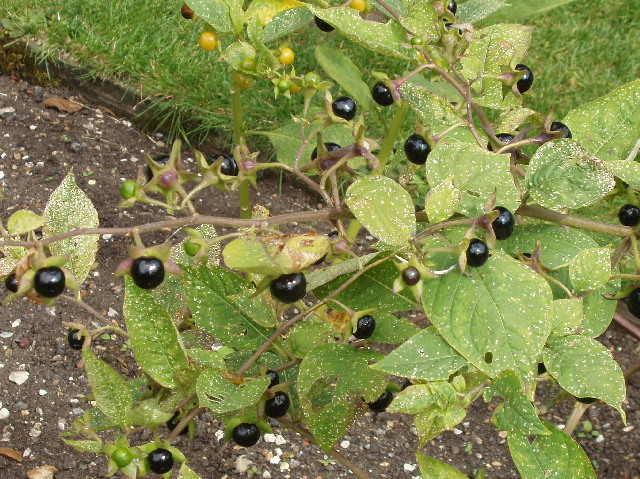
Deadly Nightshade/David Hawgood

Another poisonous plant, deadly nightshade, grows berries that can be fatal if eaten. Larger pupils were considered more attractive during the Middle Ages, so drops of juice from this fruit were once used to dilate the pupils of young women. It was called “belladonna”, meaning “beautiful woman” in Italian. Today, atropine is produced from deadly nightshade, to dilate patients’ pupils, so eye care practitioners can further examine their eyes.

American frontier families carried dried simples, some of them familiar to us as food seasoning, such as marjoram or thyme. They believed tasty sassafras would purify or thin the blood.

A popular tonic once used by mothers and prescribed by doctors in the nineteenth and early twentieth centuries was derived from the castor bean. A powerful laxative, castor oil cleansed the bowel, a treatment often used to cure whatever ailed you.

In ancient times Hippocrates warned against the use of opium, a painkiller made from the milky juice of poppies, because of its powerful addictive properties. This didn’t stop mankind from using it, whether to develop dangerous drugs such as heroin or pain relieving narcotics. In the 1660s, the English physician Thomas Sydenham produced laudanum from mixing opium with wine and saffron. This painkilling drug was used into the twentieth century. During the earlier 1800s, both the powerful narcotic morphine and the less potent codeine, were first made from opium extracts.


Willow Tree
As chemists learned how to extract and isolate chemicals in plants, they found just which components actually worked. German chemists were eventually able to analyze the bark of the willow tree. From ancient times extracts of willow bark had been used to reduce fever and relieve achiness, but not until 1899 was it known that the active ingredient was salicylic acid. Yet, decades passed before they figured out how this active ingredient, we know as aspirin, worked!

The shelves of our local health food stores are filled with herbs and ingredients made from many different plants. Some of these are based on folk remedies, proven successful throughout history, while others are yet unproven. Who doesn’t enjoy the soothing calm brought to one’s nerves through a cup of chamomile tea on a cold winter’s eve? Or settled an upset tummy with ginger ale or peppermint tea?  God knew what He was doing when He provided us with curative and nourishing plants—plants that we even derive many helpful and healing pharmaceuticals from today.

Resources:

Court, William E. “Pharmacy from the Ancient World to 1100 A.D.
Making Medicines: A Brief History of Pharmacy and Pharmaceuticals. Ed. Stuart Anderson. London, UK: Pharmaceutical Press, 2005. 21-36. Print.

Facklam, Howard and Margery. Healing Drugs: The History of Pharmacy. New York: Facts on File, Inc., 1992. Print.

Steele, Volney, M.D. Bleed, Blister and Purge: A History of Medicine on the American Frontier. Missoula, MN: Mountain Press Publishing Company, 2005. Print.

*********************************************************************************


Kathleen lives in Michigan with her hero and husband of 29 years. First, a wife and mother, she is “retired” after 20 years of home educating their three sons, who are all grown and have moved away.
Since then, Kathleen returned to Oakland Community College to complete a Liberal Arts degree and a certificate of achievement in ophthalmic assisting. Last year the American Board of Opticianry certified her.
Kathleen has been published in Home School Digest and An Encouraging Word magazines. She writes regularly for the local women’s ministry “Sisters” newsletter. She also contributes articles and author interviews to FavoritePASTimes.blogspot.com, a blog devoted mostly to historical fiction. Read about her fiction writing endeavors at: www.kathleenrouser.com.


Friday, May 13, 2011

Plants: Poisons, Palliatives and Panaceas

I’m very pleased to host Kathleen Rouser as she guest blogs over the next four Fridays about her research into historical pharmacy. She will begin this Friday and next with a series on plants and how they’ve been used throughout history to treat illness. This is excellent information for both the historical and contemporary writer. I know your plot wheels will turn with this information. Welcome, Kathleen!


Plants: Poisons, Palliatives and Panaceas

Part I

Then God said, “I give you every seed-bearing plant on the face of the whole earth and every tree that fruit with seed in it. They will be yours for food.” Gen. 1:29 NIV

Shortly after the time Adam and Eve were forced to leave the Garden of Eden, because of their fall into sin, human beings most likely began looking for relief from pain and sickness. Perhaps by God’s guidance or by what seemed like coincidence, they found that there were certain plants that not only nourished, but also relieved symptoms or cured illnesses.

Throughout the ancient world healers emerged, whether as a medicine man, priest, wise woman or physician. They were brave enough to search by trial and error to find the right cure for each malady. These practitioners, whether spurred on by superstition or curiosity, had to figure out which plants healed... and which ones harmed. The line between healing and poisoning was often quite fine.

A few of the remedies the Sumerians used were made from licorice, myrrh, mustard and oleander. The Code of Hammurabi, originating during his reign (1795-1750 BC), regulated medical practice. There, apothecaries emerged, since the role of preparing medication was considered separate from that of the physician.


Poppy Plants
Around 1500 BC, the Egyptians wrote a dissertation on medicine and pharmaceuticals. Among many plant sources they derived their drugs from were castor seed, spices, poppy and acacia. They imported some ingredients due to the limitations of what they could grow. The Egyptians developed ways to dry, ground up and weigh these materials. Those that concocted medicines were called ‘pastophors’ and were members of a priestly profession.

Seventh century BC clay tablets have been discovered revealing that the Babylonians used many plants as pharmaceuticals including castor seed, thyme, peppermint, myrrh, poppy and licorice.

Various theories of diagnosis and treatment arose through the Greek and Roman civilizations. Pedanius Dioscorides, who lived from around 50-100 AD, wrote Materia Medica, which listed various materials with their medicinal uses and also Codex Aniciae Julianae. This text on herbals, listed many plants and how to prepare them through drying and extraction. Dioscorides, a surgeon to the Roman armies, shared a philosophy with another famous Roman medical man, Galen. They believed that each plant’s shape, color or other physical characteristics left a clue as to which body part or ailment it was meant to treat. By the 16th century, this was foundation to one Christian viewpoint, which had expanded upon the Doctrine of Signatures, stating that it was the Creator who had marked each of these plants for their use.

During the Dark Ages, the Arab world and the monasteries of Europe, with their healing gardens, preserved much pharmaceutical knowledge.

Throughout history, many folk remedies, based on superstition, were supplemented with chants and rituals. Most often they missed the mark, perhaps imparting comfort if nothing else, considering man’s need to feel as though he is doing something! But apart from that, many plants continued to be used for healing and a large proportion of modern day prescription drugs are rooted in their derivatives. Some emerged to the forefront.


Cinchona Tree
During the 1600s, European Jesuit missionaries in South America sent a powder back home, derived from the bark of the cinchona tree. They’d been surprised to find out that the Native Peruvians knew how to successfully treat malaria, an illness spread by mosquitoes that has killed so many. In 1820, when French chemists extracted a chemical compound from the powdered bark of the cinchona tree, they called it quinine, based on the Peruvian name for the tree, quinquina.

William Clark and Meriwether Lewis took cinchona bark with them on their westward expedition. Lewis’s mother was an herbalist of some renown and imparted some of her knowledge to her son. While the men did not wind up contracting malaria, they found the bark useful for lowering fevers and as ingredient in poultices.

Would you like to know what “simples” are? And what potentially poisonous plants are used in pharmaceuticals today? Come back for Part II and find out!

********************************************************************************

Kathleen lives in Michigan with her hero and husband of 29 years. First, a wife and mother, she is “retired” after 20 years of home educating their three sons, who are all grown and have moved away. Since then, Kathleen returned to Oakland Community College to complete a Liberal Arts degree and a certificate of achievement in ophthalmic assisting. Last year the American Board of Opticianry certified her. Kathleen has been published in Home School Digest and An Encouraging Word magazines. She writes regularly for the local women’s ministry “Sisters” newsletter. She also contributes articles and author interviews to FavoritePASTimes.blogspot.com, a blog devoted mostly to historical fiction. Read about her fiction writing endeavors at: www.kathleenrouser.com